
Don’t give up thousands because you let the company that owes you money, tell you how much they owe you. I see it all the time, and I’d hate for it to happen to you.
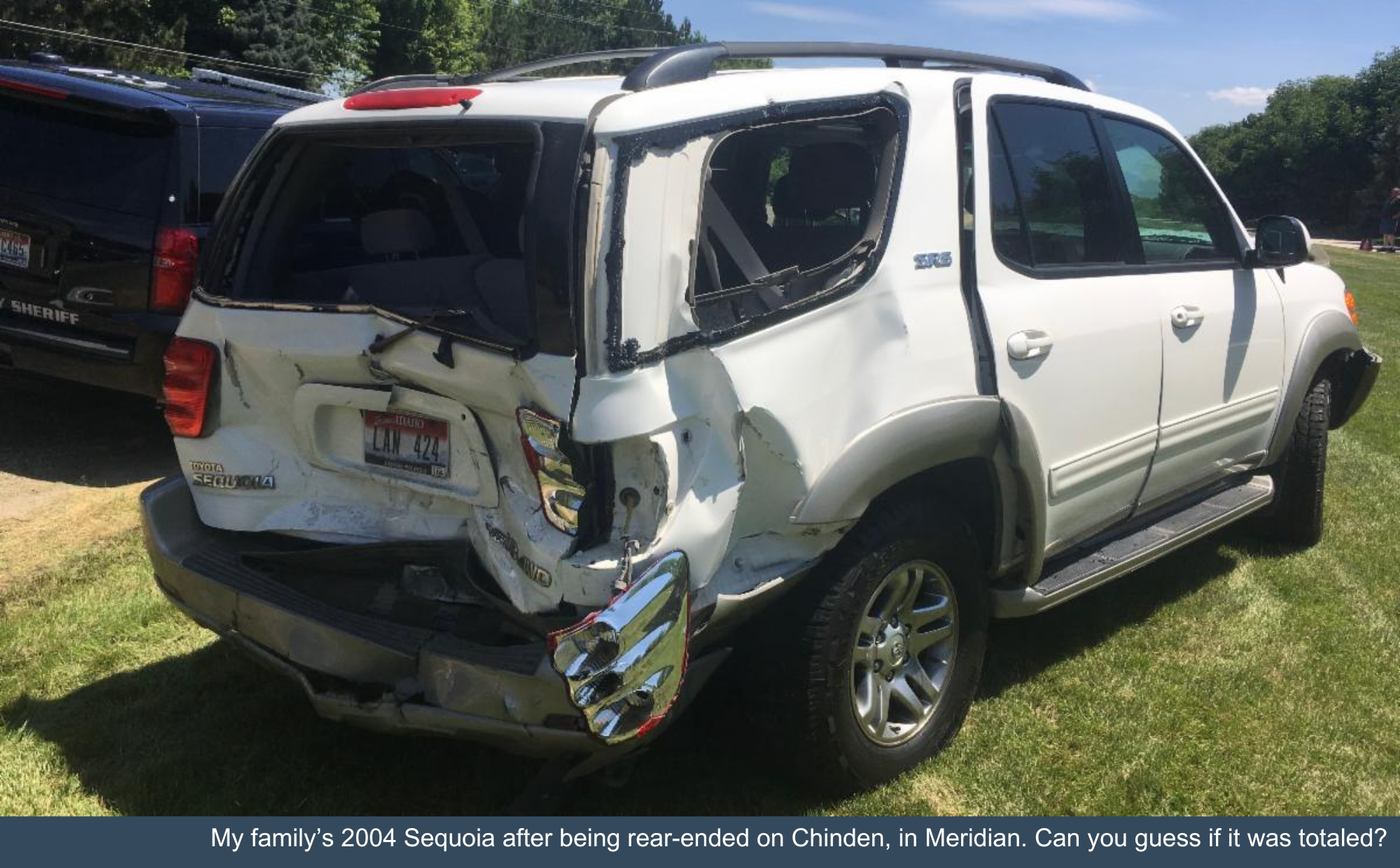
Just last week, I helped two friends and clients, who were about to settle for far less than they were owed on totaled cars, and another who was going to settle for shoddy repairs after being rear ended.
So I figured it’s time to drop some knowledge on the rest of my friends, about the sneaky side of car insurance, so the next time you or someone you know ends up on the wrong end of someone’s bumper, you’ll know how to make the most of that insurance you’ve been paying for.
Here’s four quick things we’ll cover, that could make all the difference:
- The extras insurance should pay if your car gets totaled—it’s more than most realize
- The insurance value estimate and offer is just that—an estimate and offer—consider it a starting point
- If it’s not totaled, how to make sure your car gets fixed right. (hint: it’s probably not at the insurance company’s “preferred shop”)
- Your car now has an “accident history”. Doesn’t that tank its value? Yep! Here’s how to get paid for that diminished value.
Don’t have time to read more? Just know you can reach out to your Maverick Team. We’ll be happy to help, so you have someone in your corner who knows how to navigate these nuances with your best interest in mind.
The agent or adjuster you end up talking to might be nice, but please don’t blindly trust the people that owe you money, to tell you how much they owe you.
Here’s what you need to know…
1. The Extras Insurance Owes You If Your Car Gets Totaled
First off, if your car is a goner, most insurance companies will offer you an estimated actual cash value (ACV) for your car—and nothing more. But what you really want is the replacement cost value (RCV), which means what it actually costs to buy the same kind of car in the real world – actual market value plus sales tax, doc fees, title fees and all.
- If you were at fault – check your policy details to see if you have ACV or RCV coverage. If you only have ACV coverage, make sure to read the next section to at least get all you should for your vehicle. If you have RCV coverage, make sure you get all those extras they might “forget” to tell you about.
- For the future – If you only have ACV coverage and you run on a tight budget, you might consider upgrading to RVC, so you don’t come up short if you ever need to replace your vehicle.
- If you weren’t at fault, and you’re being compensated by the other yahoo’s insurance, then you should definitely fight for RCV compensation – and most of the time you’ll get it just by asking. You just have to know to ask, as some companies won’t offer it up front, hoping you’ll be in a hurry to get your settlement check so you can get out of that rental car. Only to realize later, you still have thousands more to pay in taxes and fees to get that new ride.
2. The insurance valuation and offer is… just an offer
- Regardless of whose insurance is paying, you’re going to get a settlement offer, and part of that will be for the estimated value of your car. They may justify that number with book values and other data. It might be fair, and it could be way under. Don’t be too quick to accept that initial offer.
- Do your own homework, and make sure you could actually buy a similar car with the money they’re offering. They’re often a little low.
- Do take into account the previous condition of your vehicle and any upgrades you’ve done. If yours was a one-owner with no prior accidents, or an immaculate 10 year old car, that’s going to be hard to replace, and should be worth a bit more.
- Do reach out to us. Researching book values can be helpful but they’re not always accurate with the market. We can get you a list of comparable vehicles (comps) that will often justify a much higher value – especially for certain vehicle types. You can share these comps to help make a case for $500-2000 more for your car.
Check out the Jeep example below, where book values were landing under $12k, but our comps within 700 miles, +/- one model year, showed a $14-17k value.
 |
 |
- Don’t sign anything or accept a check in a hurry, hoping to get any extra value later. Once you take a check from them, you’re pretty much accepting the amount written on it as your final settlement.
3. If Your Car Isn’t Totaled, Make Sure It Gets Fixed Right
Okay, so your car survived—great! Now it’s time for repairs. Here’s the deal: your insurance company will probably try to steer you to their “preferred shop,” where they have a deal that benefits them a lot more than it does you. Talk about a fox guarding the hen house scenario.
If it’s a legitimate shop, how bad could it really be? Well, bad enough to knock a couple thousand off your future trade-in value. Here are some of the corners we see cut all the time on trade-in vehicles—and most owners had no idea:
- Orange peel paint texture and dust specs in the clear coat. The good shops fix this; others won’t if you don’t call them on it.
 |
 |
- Non-OEM parts that never quite fit right, leaving gaps in body panels. You might not notice, but to a dealer, these look like the Grand Canyon.
 |
 |
- Paint mismatch – Paint doesn’t match perfectly unless it’s blended from repaired to original parts. It might not jump out right away, but it’ll get more obvious over time.
 |
 |
- Masking trim instead of removing it before painting—cutting corners where you don’t want them.
These issues may seem small, but they stick out to any car dealer like a sore thumb, and they’ll knock down your car’s value big time. Especially if they get worse over time, like this one where the prep work wasn’t done right

Or this one where too much body filler, or “bondo” was used

Both looked good enough to the owners at first. Now they’re not so happy.
You have the right to pick your own body shop—one that actually fixes your car right. Do your homework, ask lots of questions, and know we’re here to help you find the right shop.
Next, bring your car to Maverick (or someone else you trust that really knows cars) after the repair, and we’ll help you spot anything that’s questionable. You have the right to and make sure it gets fixed to industry standards – even if you didn’t see where it was sub-par yourself. Don’t settle for anything less.
4. “Accident History” Lowers Your Car’s Value – Here’s What to Do
No matter how well it gets repaired, your vehicle’s value takes a hit just from the “accident history”—especially if the Carfax shows “moderate” or “severe damage”, or “airbags deployed”, etc. That’s called diminished value, and no surprise, the insurance company probably won’t volunteer to compensate you for it. But now you know, and just by asking you might get them to write you a check along with covering that repair bill. If not, you may have to file a separate claim to get reimbursed for the loss in market value. But how much should you expect?
We’ll help you figure that out and give you an official “diminished value” statement specific to your vehicle and its new “record”. These have helped our friends and clients get $1500-4500 to cover the diminished value you’ll see when you go to sell or trade it in the future.
Final Thoughts
So there you have it: a quick guide to making sure the insurance company doesn’t pull a fast one on you. You pay your full insurance bill every time, so don’t let them short change you when it’s their turn to pay up. If you need help with questions, valuations, or figuring out what your car was really worth, give us a shout. Your Maverick Team is ready to jump in and make sure you’re getting a fair deal or quality repair.
Stay savvy out there, and remember, we’ve got your back!
Connect with us


